I set a UX vision and strategy for humane and intelligent video conference features for a 60+ person team:
- We focused on the human aspects of telepresence, creating a product development environment that emphasized empathy and collaboration.
- We started with science and made honest and difficult choices based on user data. These choices gave us confidence we were building the right thing.
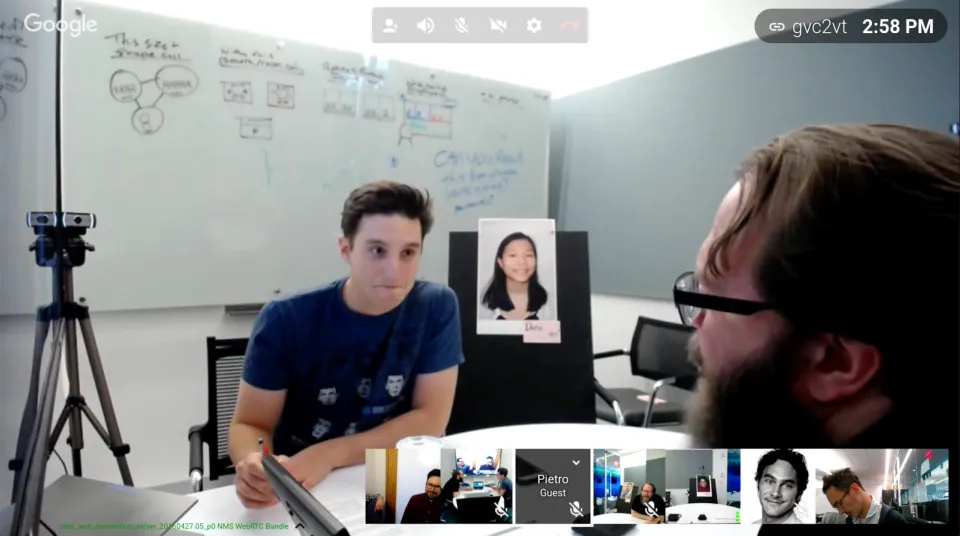
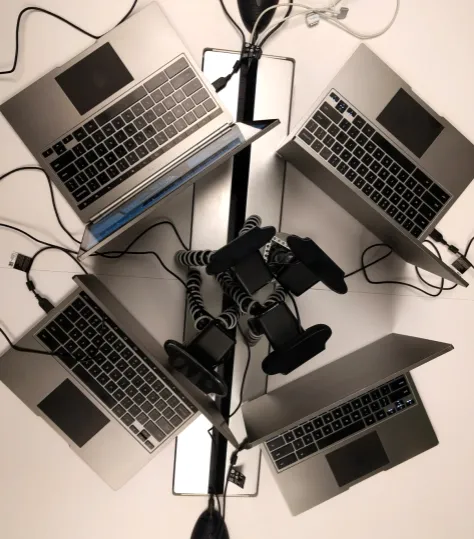
- We built to learn. Offline rooms, dedicated lab networks, dSLRs strapped to walls… We built our own VC system to deeply understand the medium in which we work.
The humans in the room
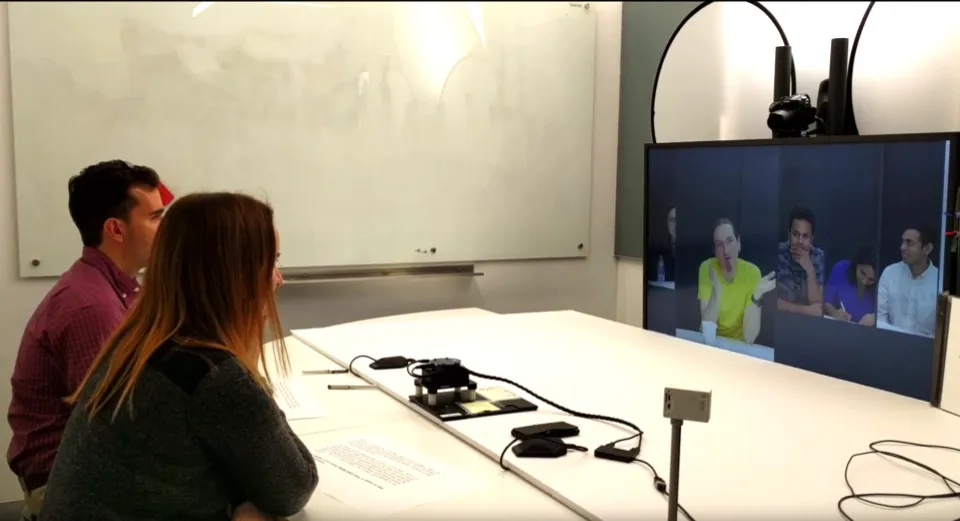
We identified the “bowling alley effect” as a major pain point in meetings – a blocker to how people see and are seen to others. This fundamentally affects communication and meeting outcomes.
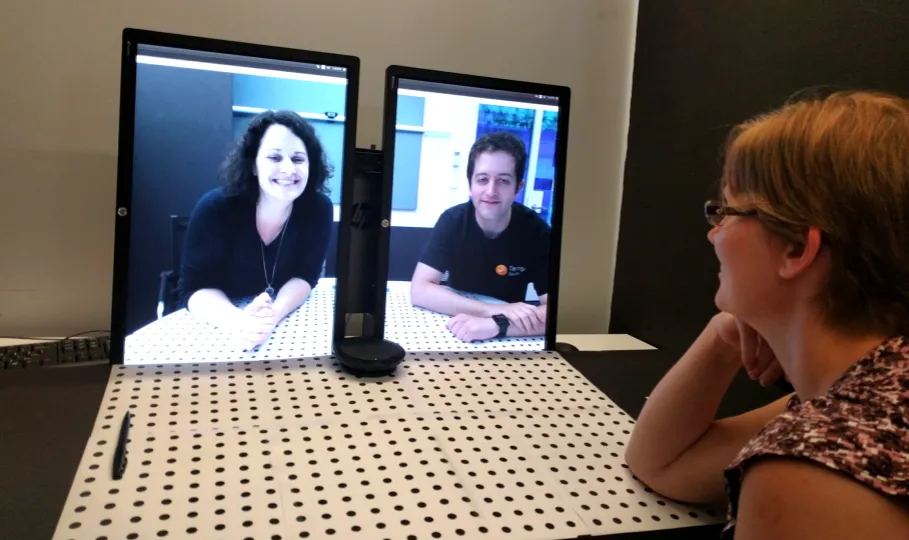
From this, we developed the concept of natural scale, where participants are shown life-size when they speak, resulting in improved communication metrics. This led us to implementing computer vision to seamlessly control the meeting room camera in a way that ensures fairness for all users.
89% of participants reported satisfaction with seeing others at natural scale, compared to 74% in the default configuration.
A template for innovation
Our work led us to pioneer other advanced features – many of which have been launched to Google Workspace users.